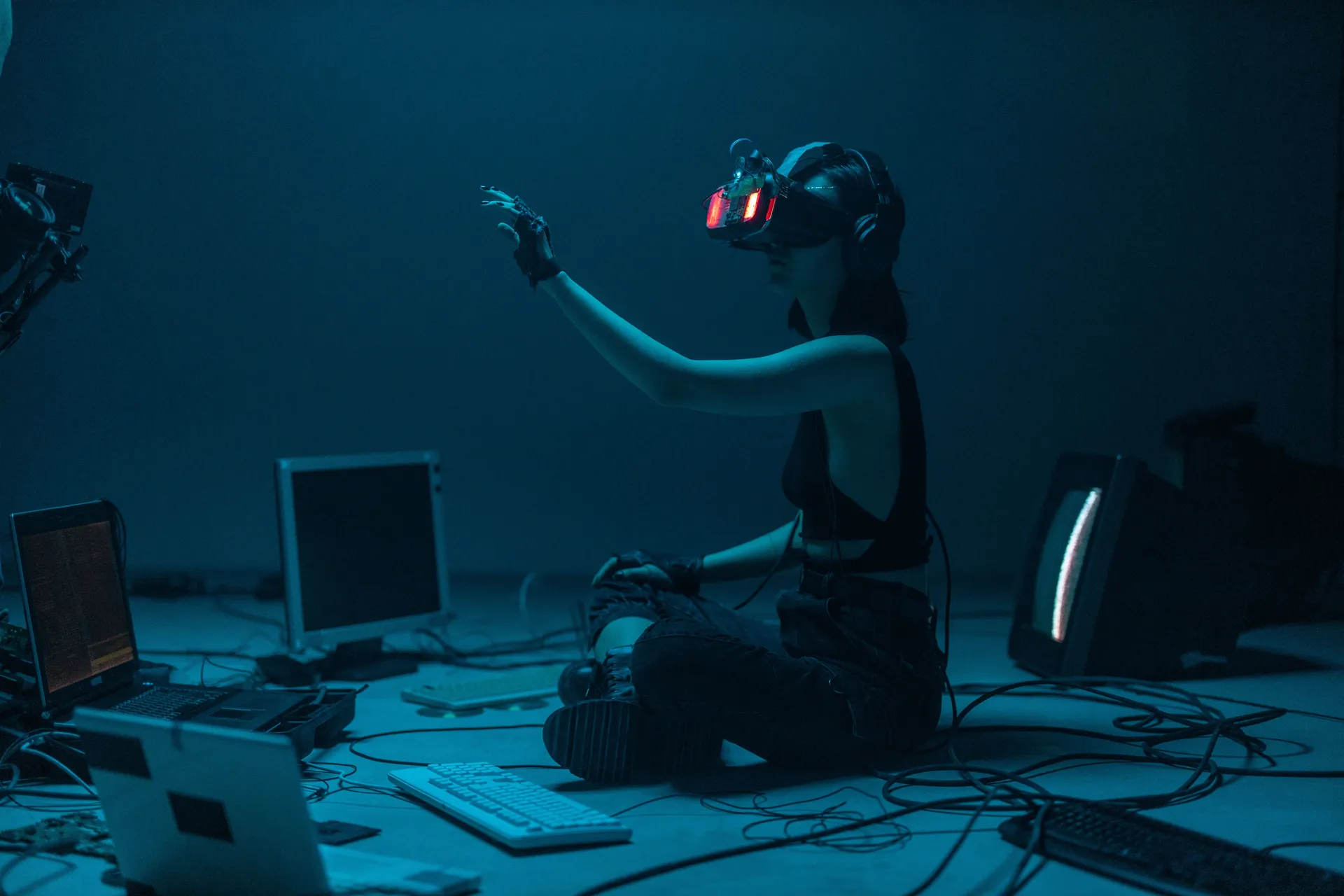
Person wearing a VR headset in a dim teal room surrounded by old computers

AI Anxiety Isn't About Technology. It's About Uncertainty.

Artificial intelligence is changing the way we work.

Every week seems to bring a new tool, a new breakthrough, or a new prediction about the future of jobs. Organizations are focused on efficiency, automation, and productivity. Employees, meanwhile, are trying to answer a much more personal question:

"Where do I fit into this future?"

Triple-exposure portrait of a man overlaid with streams of binary code

The Geography of Exclusivity

As a psychologist and coach, I have noticed that many conversations about AI focus on what the technology can do. Far fewer explore what this period of rapid change feels like for the people living through it.

And that experience often has a name: anxiety.

It's important to note here that people are not essentially afraid of technology itself, but uncertainty is hard for human beings.

Why AI Feels Different

Workplaces have experienced major technological shifts before. Computers transformed offices. The internet changed communication and smartphones reshaped how and where we work. Yet AI feels different for many people.

Perhaps because the pace feels faster. Perhaps because the changes seem harder to predict. Or perhaps because AI touches something deeply personal: our sense of competence and relevance. In my work, I have seen this play out in very human ways.

Human Ways

In my work, I have seen this play out in very human ways.

One client began experiencing significant anxiety when his organization announced plans to integrate AI into its workflows. Initially, the fear was vague. Questions about the future, concerns about keeping up, worries about what the changes might mean for his role. Months later, his entire team was laid off while he was retained. What appeared to be good news from the outside became the beginning of a much deeper struggle. The anxiety gave way to depression, survivor's guilt, and a profound sense of isolation.

The issue was not simply job security. It was the loss of community and of the future he had imagined for himself.

A glowing network of connected points forming a reaching hand
A woman sitting with her face in her hands

The Anxiety Beneath the Anxiety

When people speak about AI anxiety, they often talk about jobs, automation, or financial security.

Those concerns are real.

But beneath them are often deeper questions.

Will I still matter?

Will I be able to keep up?

Will my experience continue to be valued?

Will there still be a place for me?

From a Gestalt perspective, anxiety often emerges when our attention becomes consumed by imagined futures. The mind rushes ahead trying to predict, prepare, and protect. We begin living in scenarios that have not yet happened.

Gaps

The difficulty is that uncertainty leaves gaps, and human beings are remarkably skilled at filling those gaps. Rarely with neutral stories. More often with our fears.

In therapy, I often notice that people want certainty before they are willing to move forward. Yet many of life's most important transitions offer certainty only in retrospect. We understand them after we have lived through them, not before.

The challenge is learning how to remain in contact with what is happening now rather than becoming completely consumed by what might happen next.

A glowing network of connected points forming a reaching hand
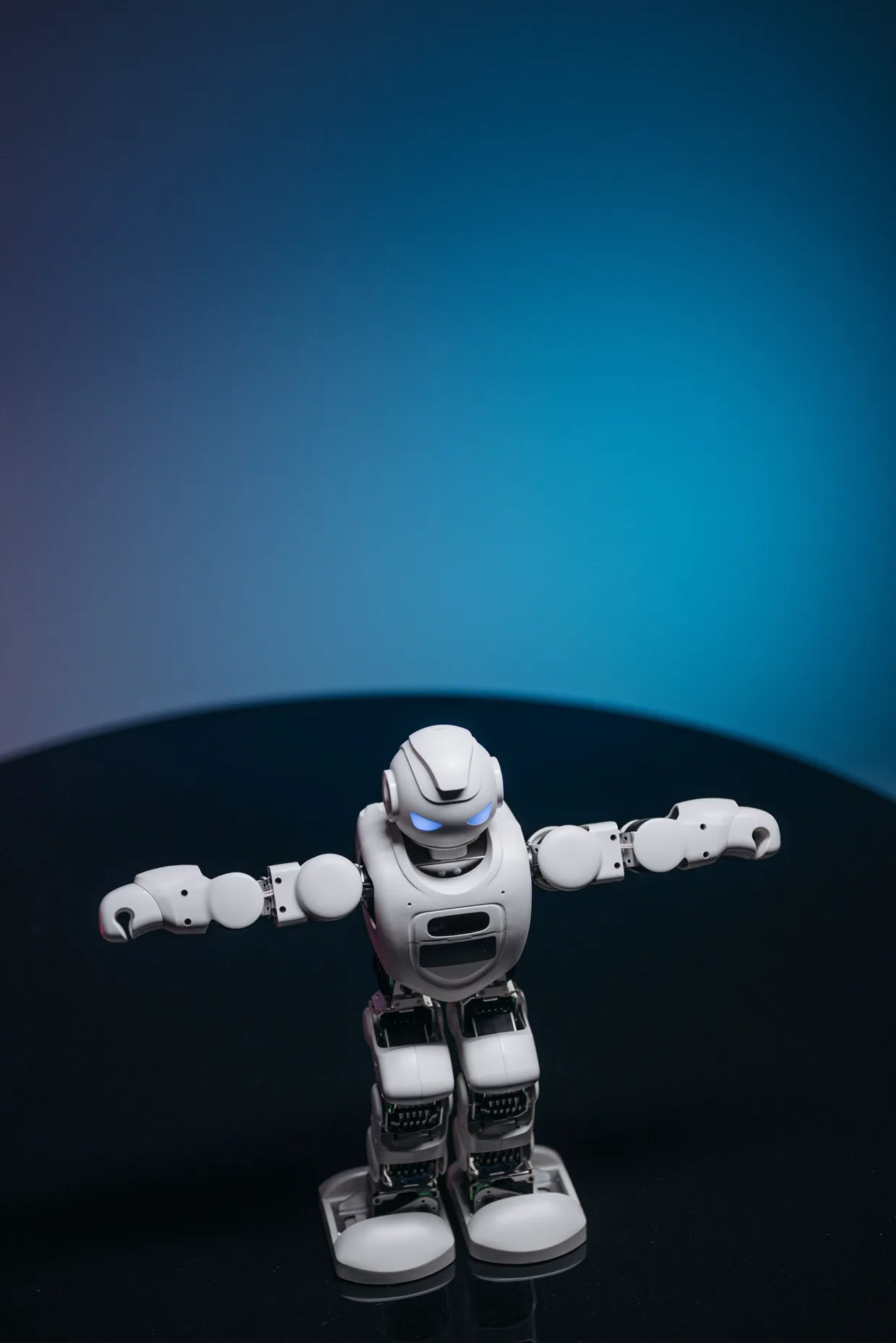
A small white humanoid robot with its arms outstretched

Information Overload Is More Than an Attention Problem

Many employees describe feeling overwhelmed by the constant stream of information surrounding AI.

New tools.

New headlines.

New predictions.

New expectations.

The challenge is not simply keeping up with information. It is trying to make sense of change that never seems to slow down long enough to be absorbed.

Human beings need time to digest experience. We need space to integrate what is happening before the next wave arrives.

But many workplaces are moving faster than people's ability to make meaning of the changes around them.

The result is not just confusion. It is emotional and cognitive fatigue.

People become exhausted not because they are unwilling to learn, but because adaptation itself requires energy.

NEED TO KNOW

FAQs

You don't need to be in crisis to benefit from therapy.
People come to therapy for many reasons e.g feeling anxious or overwhelmed, struggling in relationships, navigating life transitions, experiencing burnout, or simply wanting to understand themselves better. If you've been carrying something that's affecting your wellbeing or keeping you feeling stuck, therapy can offer a space to explore it with care and curiosity.

The first session is a gentle, collaborative conversation where we explore what brought you here, your current challenges, and what you hope to achieve. There is no pressure to share everything immediately; we go at your own pace.

Our methodology blends Gestalt therapy, Cognitive Behavioural Therapy (CBT), systemic thinking, and trauma-informed somatic awareness, emphasizing presence, depth, and genuine connection.

Duration varies depending on individual needs. Some clients benefit from short-term focused support (8-12 sessions), while others engage in longer-term exploratory personal growth.

Strict confidentiality is the cornerstone of our practice, bound by professional ethical codes. Your personal disclosures remain fully protected.

Therapeutic rapport and psychological safety are fundamental. We offer initial consultations to ensure we resonate with each other and that our clinical approach aligns with your personal goals.

Yes! We work with clients across 7+ countries via secure, confidential video conferencing sessions, accommodating multiple time zones worldwide.

In cases of severe psychiatric crises, active psychosis, or acute medical emergencies, we recommend immediate specialized psychiatric or hospital-based interventions.

We address anxiety, burnout, relationship friction, childhood wounds, grief, self-esteem, life transitions, existential distress, and career-related pressure.

CONTACT

At the Awareness Lab, every conversation begins with
discretion and trust. Get in touch with us to explore
tailored solutions designed around you.

Two Hands Connecting

LET'S TALK

LET US KNOW WHAT YOU NEED AND
WE'LL GET BACK TO YOU IMMEDIATELY.